In a field of practice concerned with high levels of sterility, in a world filled with autoclaves and ultrasonic baths and single-use items for infection control, you really can’t neglect the simple benefits of having a dry, clean pair of hands.
Hand towels are an essential part of preventing cross contamination, and ultimately, they protect you, your colleagues, and the patients who rely upon your hard work. We’ll be exploring hand towels in this blog post, and considering the benefits of different towel types, as well as answering some common questions to help you get the most out of your hand towels.
Types of Hand Towels for Dental Practices
1-ply hand towels
Single-ply hand towels are simple, and basic. A single sheet of pulped paper, used for the purpose of wiping and cleaning. These hand towels tend to be the cheapest, but often demonstrate the lowest amount of absorbency and strength. These towels tend to be used for simple wiping jobs, and often a task will require several sets of towels to mop up a spill.
2-ply hand towels
2-ply towels are two single-ply towels which have been bonded together via an adhesive, this provides structural reinforcement to the hand towel, and effectively doubles the amount of absorbent material the hand towel has. This makes the towel tougher, and more able to absorb large amounts of liquid. While these towels may often be more expensive than single-ply towels, they tend to be more highly-favoured due to their general ability to absorb more.
Embossed hand towels
Sometimes hand towels are embossed with patterns, this has a variety of benefits. Firstly, it can help to distinguish between hand towel types, for diferentation purposes. Mainly, these towels are highly-sought-after because the embossed patterns create a lightly abrasive surface which may be better at catching deposits and dislodging them from your hands.
Colour-coded hand towels
Hand towels come in a variety of colours, with two popular colours being white and blue. These two may be popular because their colouration contrasts with the colour of common contaminants such as red blood. Some practices try to use different sets of disposable hand towels for different tasks, and appreciate the colour coding.
Can I use Reusable fabric hand towels in my dental practice?
These hand towels are rarely used given their potential for cross-contamination, and the energy-intensive process that comes with thoroughly washing a fabric hand towel. These are sometimes used in the bathrooms of private dental clinics, but generally they see no use outside of this.
Are there Eco-friendly hand towels?
The environmental impact of single-use hand towels is considerable, which is why several practices turn to more environmentally-friendly alternatives. However, the absorbency, and toughness of hand towels tends to be slightly deteriorated after the recycling process.
- Recycled paper – Hand towels made from recycled paper help to offset the use of virgin (fresh) pulp in hand towel production. Essentially, by processing and re-using paper to make a hand towel, you choose a more sustainable alternative to companies which freshly producing
- Compostable towels – These towels can be safely broken down after use and will not end up in landfill;.
Hand Towel Material & Absorbency.
To talk about hand towel absorbency we’ll have to first talk about GSM. GSM means grams per square meter, and is a metric commonly used in measuring the absorbency of Hand Towels. Every gram of liquid a hand towel absorbs will take up space within its material, measured in square meters, effectively meaning that this is a ratio of liquid absorbed to hand towel space consumed. While this metric tends to be more relevant to fabric towels, however paper towels may still list their GSM to prove absorbency. Single-ply hand towels tend to have a GSM somewhere between 35 to 50 GSM.
How absorbency affects infection control and drying time:
More absorbent towels help you to dry your hands faster, as they absorb more water when being used. This decreases the risk of contaminating other surfaces with still-wet residue on your hands. Wet surfaces allow for rapid transfer of microorganisms more readily than dry surfaces, so it’s good to maintain a high level of dryness in your practice.
A reminder on NHS and HTM 01-05 guidance regarding hand drying in clinical settings:
- Carry out hand hygiene between each patient treatment, and before donning and after removal of gloves.
- Use good-quality soft paper hand-towels.
- Ensure that paper towels and drying techniques do not damage the skin.
- Hand-washing should take place at least at the beginning and end of every session, and if hands are visibly soiled.
Why air dryers may be discouraged in surgeries vs. Towels
Air hand dryers are a popular alternative to paper towels, however they are not recommended for use in the dental practice. This is because they are noisy and may disperse microorganisms via aerosol. Whereas paper towels provide a safe means of drying hands while making the spread of microorganisms much more predictable than a high-speed air current.
Recommended Hand Towels
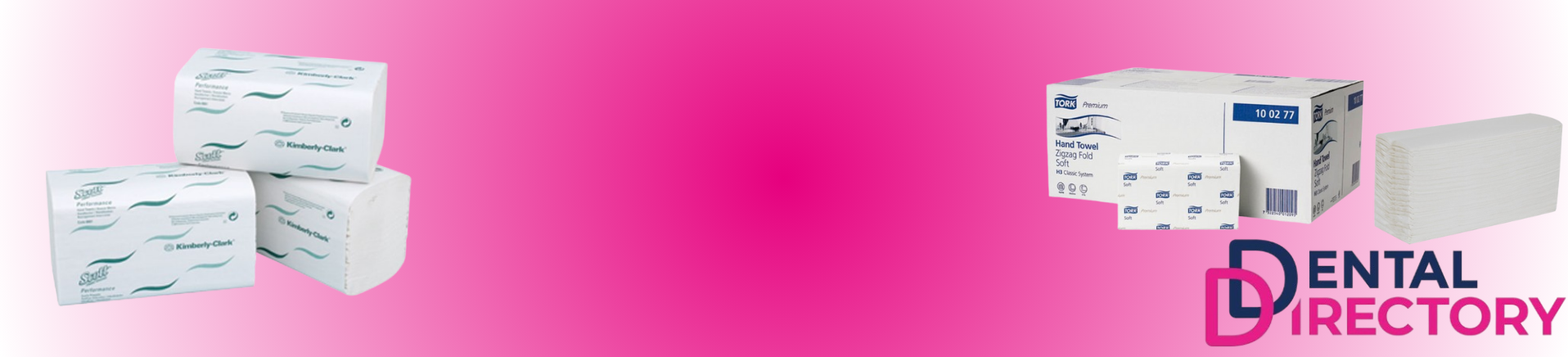
Recommended for Large Practices - Z-Fold Hand Towel 2 Ply White
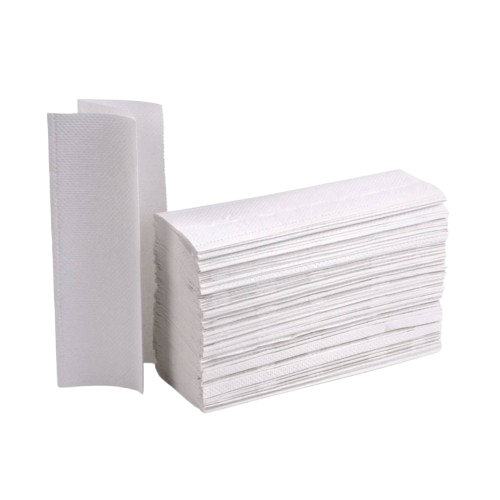
Coming in a case of twenty sleeves, each containing 150 towels, this order totals to a whopping 3,000 towels per purchase, making it great for bulk purchases, or for larger practices who use a lot of towels. In terms of quality, these towels deliver too, with a soft feel, an embossed surface, 2 ply for absorbancy and strength. To top it all off, these towels are safely flushable.
Recommended for Ecological Practices - C-Fold Hand Towel 1 ply, White - Recycled Paper
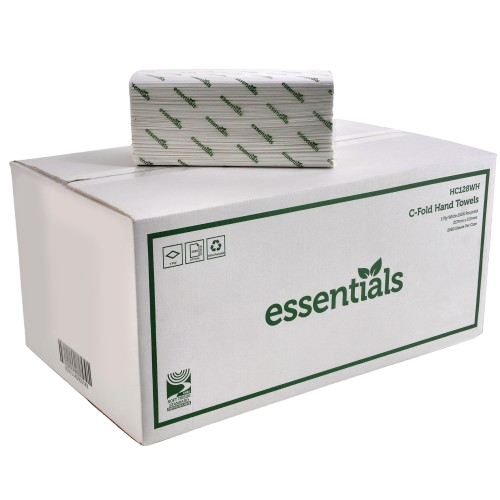
Made using 100% recycled paper, these 1-ply towels are perfect for smaller spills and cleaning. Each case contains 2,880 towels distributed across 12 sleeves of 240. These towels are great for practices who wish to reduce the amount of paper waste they might produce.
Recommended for Softness - Tork Singlefold Hand Towel - Extra Soft 2 ply, White
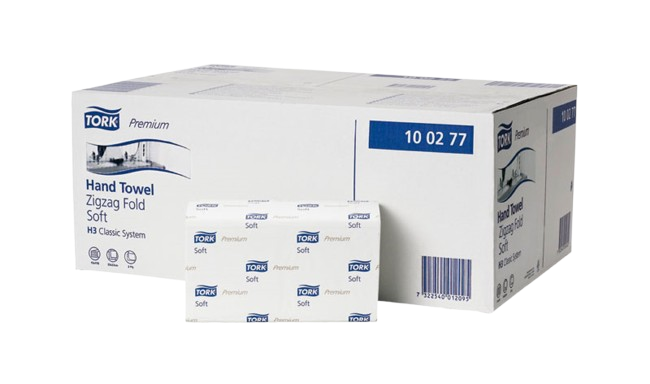
A pack of 3,000 towels distributed across 15 bundles, these towels are 2-ply, exceedingly soft, and very absorbant. This is great for practices trying to provide a comforting, luxurious feel for patients, and just a little extra comfort for practitioners.
Conclusion
Using the right hand towel can help to improve cleanliness and comfort within your dental practice. When utilised effectively alongside hand towel dispensers and other infection control consumables, hand towels are an excellent tool in mopping up spills and keeping dental practices safe from cross-contamination.
Shop Dental Directory’s range of Hand Towels Now.
FAQs
Are hand towels considered clinical waste?
Following guidance from the ‘Health Technical Memorandum 01-05: decontamination in primary care dental practices‘ , hand towels are to be considered domestic waste. This does not cover instances where the hand towels may be contaminated with any kind of infectious material. Contaminated hand towels should be disposed of in the orange bag for hazardous materials.
Can hand towels be reused in dental practices?
No, hand towels should never be re-used in the dental practice. Hand towels are to be disposed of after use and replaced.
Are coloured hand towels more hygienic?
No, coloured hand towels are not more hygienic than hand towels of any other colour, no.
How should hand towels be stored in surgeries? -
Hand towels should be stored in their packaging in a cupboard or inventory space. When needed for use, they should be placed in a dispenser.
Are Air Hand dryers allowed in dental practices? -
Air hand dryers have been discouraged from use in practice, particularly in clinical settings. However, in instances which don’t require clinical cleanliness, you may find them in the dental practice (I.e. in the practice’s bathroom.)