What is The Acteon Piezotome Cube?
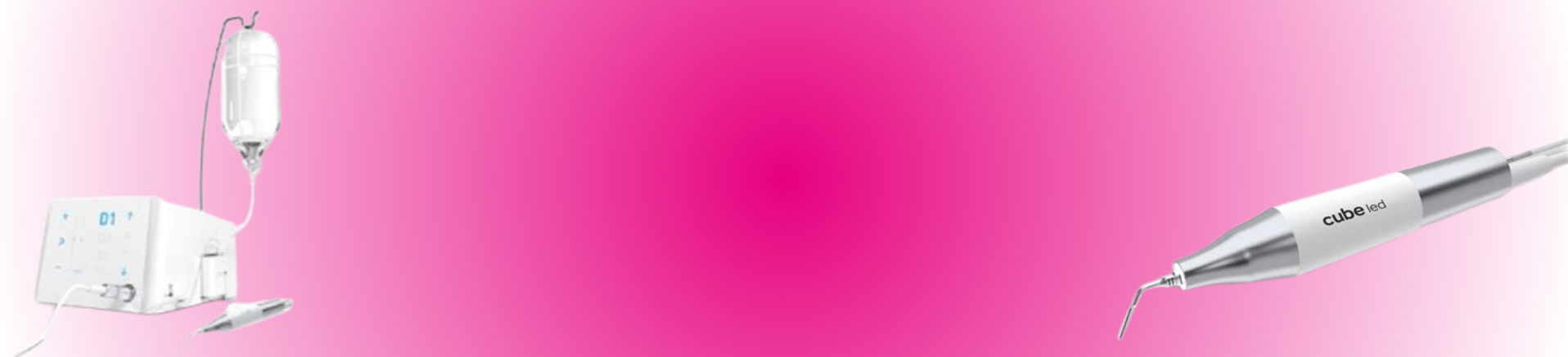
When you hold the light, comfortable handpiece for the Acteon Piezotome Cube, it might not sink in that this is the device which could eventually come to replace most rotary tools in atraumatic bone surgeries.
Using ultrasonic technology, the Piezotome cuts effectively in tooth extractions, ridge splitting, crown extension, sinus lifts, and more. Its workflows are easy to use, its techniques are safe, and patients often benefit from reduced swelling, bruising, and bleeding, demonstrating improved recovery after its use. So, what is this new piece of equipment, how does it work, and importantly - what can it bring to your practice? We'll briefly be exploring these questions in today's blogpost.
If you don’t know about us, we’re Dental Directory. We’re a dentistry supplier who’ve been happily supporting practices for the last fifty years. We do training, equipment, products, and even full surgery kit fit outs. Once you’re done with this blog, why not see what we can do for you?
How does the Piezotome Cube work?
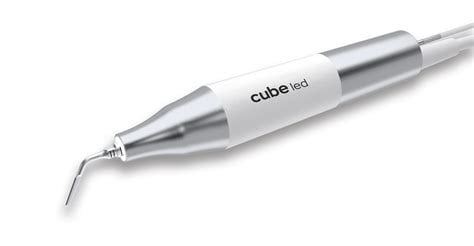
The Piezotome Cube is an ultrasonic device, similar in concept to an ultrasonic scaler, but multitudes more powerful. Utilising incredibly rapid vibrations, its metal tip is capable of easily cutting through bone & other mineralised tissues while – notably – preventing damage to soft tissues. Utilising a process called piezoelectricity, which converts electrical current into the physical oscillation of its cutting tip. Correct use of the Piezotome Cube reduces the chance for user error and helps to preserve blood vessels, nerves, ligaments, and any other soft tissues which should be protected during surgery. This ultimately encourages safer procedures for patients, and enhanced recovery, which is especially helpful in procedures such as Apical surgery & other microsurgeries.
Piezotome Cube -
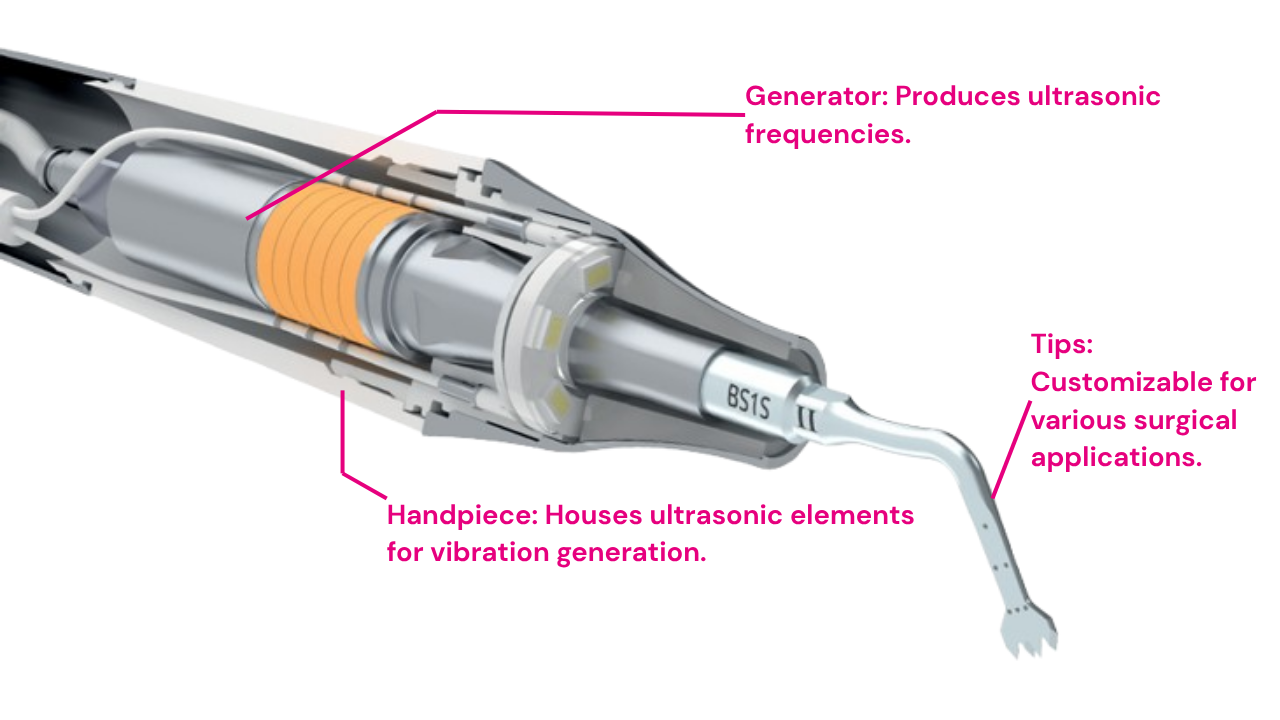
The Piezotome Cube's versatility partly comes from its range of interchangeable tips, each of which are suited to a different function, these being:
- The 6 fundamental ACTEON® tips – A versatile set of six tips used for osteotomy, osteoplasty, extraction and lateral sinus lifts.
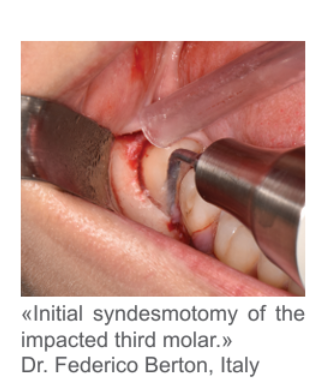
- Extraction II Kit Syndesmotomy – Used when widening ligamentary space. The LC tips are great to separate teeth from their attachment systems for rapid extractions, with less luxation while ensuring the alveolar bone edge remains intact.
- Bone Surgery II Kit Osteotomy/Osteoplasty - Allows for cutting, excising and remodelling bone structures, while reducing the risk of soft tissue lesions.
- Crest Splitting II Kit – This kit includes multiple tips, each of which have increased thickness, allowing for a smoother expansion of the crest and reducing the list of bone fracture.
- Sinus Lift II Kit Lateral Sinus Lift – A thin cut tip, designed for effortless, controlled cutting. This can help to limit the risk of sinus membrane perforation or antral artery damage.
- Intralift II Kit Crestal Sinus Lift - Using a crestal approach to perform a sinus lift, this kit enables the performance of safer non-invasive surgery.
- Piezocision II Kit Accelerated Orthodontic Surgery - For the treatment of malocclusions via ultrasonic corticotomies for a quicker and minimally invasive surgery, whether that’s sutureless or flapless.
The bone stimulated by micro-incisions accelerates tooth movement, making treatment 3 to 4 times faster*. - Crown Lengthening – With tips which are completely innocuous to the gingiva, the integrity of bone and adjacent teeth is all but guaranteed.
Cutting efficiency and the Piezotome Cube
The Piezotome Cube and Bleeding
Cutting efficiency is one thing, but the precision & design required to minimise patient bleeding is an enormous bonus for the Piezotome Cube. The simple matter is that a more accurate cut and improved visibility help to reduce the amount of bone removal required for procedures in general. Smaller and more accurate incisions help to reduce the amount of damage the general surrounding area, which decreases patient recovery time, as well as the risk of complications.
Less bleeding means improved visibility during procedures and reduces the need for haemostatic agents.
The Micro-Cavitation effect
It's not just enhanced cutting precision which decreases bleeding when you use the Piezotome Cube, but it's also the Micro-Cavitation effect. Caused by ultrasonic vibrations, Micro-cavitation encourages pressure changes in liquids which, in this instance, leads to reduced bleeding. Micro-cavitation also causes a notable antibacterial effect by interfering with the cell walls of bacteria.
Ultimately the Piezotome Cube helps to encourage enhanced accuracy and increased patient safety through how it is designed to cut.
Thermal Damage & Dental Surgeries
Commonly, one of the types of damage which can occur during dental surgery is thermal damage, or thermal necrosis, as the friction from use of rotary instruments generates heat throughout its use. This heat can damage soft tissues and bone. Comparatively, the Piezotome Cube is constantly irrigated and operates at much lower temperatures, which significantly reduces the risk of thermal necrosis.
Comparison - Rotary Instruments vs the Piezotome Cube
|
Rotary Instruments |
Piezotome Cube |
|
|
Bone destruction |
High levels of immediate bone destruction |
High precision allows for socket preservation |
|
Soft Tissue Safety |
Present risk of soft tissue damage |
Preserves soft tissues |
|
Force required |
High amounts of force required |
Lower force required, higher levels of control |
|
Pain and Swelling |
Post operative pain for two days, surgical flap required |
50% less pain and swelling |
|
Analgesic required |
Requires analgesic use for pain management. |
98% decrease in analgesics intake |
How The Piezotome Cube Enables the Bony Lid Technique
You may have heard about the Bony Lid Technique already. This technique is used in apicoectomies, and it works by creating a window in the bone & forming a removable lid. This window helps to provide better access to lesions, as well as visibility, and with the Piezotome Cube the window can be made and then resealed with the "lid". The lid is formed and then carefully extracted to be preserved in Hanks Solution (isotonic saline). This removal helps to facilitate the microsurgical procedure, and once that procedure is completed, the lid is repositioned and secured using platelet-rich fibrin (PRF) or a collagen membrane.
This procedure is preferred for several reasons, firstly it can be very useful in providing access and visibility which wouldn't otherwise be possible without bone removal. The use of the Piezotome Cube creates a precise, non-heated osteotomy cut which decreases trauma and simplifies the repositioning and stabilization of the lid. Secondly, it limits the intrusion of periodontal cells, encouraging bone healing.
In Conclusion
The Piezotome Cube facilitates a new way of performing multiple endodontic surgeries. With an easier workflow when compared to rotary tools, a high level of versatility, and evidence suggesting a notable decrease in both bleeding, bruising, and complications, the Piezotome Cube demonstrates innovation and an outstanding alternative to rotary tools.
Shop The Acteon Piezotome Cube
Studies in support of the Acteon Piezotome Cube
- Bharathi J. et col: Effect of the Piezoelectric Device on Intraoperative Hemorrhage Control and Quality of Life after Endodontic Microsurgery
- Degerliyurt et al Bone Lid technique with piezosurgery to preserve inferior alveolar nerve. 000 108(6) 1-5 2009
- Abella F. et col: Applications of Piezoelectric Surgery in Endodontic Surgery: A literature Review.- JOE 40 (3) Mars 2014