The Role of Autoclaves in the Dental Practice
An Autoclave is used to quickly and effectively sterilise dental tools and other specialist equipment, allowing for their re-use. The best autoclaves should always empower your dental practice, providing the fastest sterilisation, traceability, and energy efficiency. By comparison, an older autoclave that is beginning to lose its efficiency can slow your practice down with it, long cycle times can hold back your practice, and breakdowns can bring your practice to a standstill.
If you’re looking to replace your autoclave, or just beginning to explore your options, this blog post is the one for you. We’ve written up a concise-yet-comprehensive list of the benefits of upgrading your autoclave in 2026. We’ll be paying particular attention to the Vacuclave 305 in this blog post, using it to highlight some of the more persuasive arguments for purchasing a new autoclave.
If you don’t know about us, we’re Dental Directory. We’re a dentistry supplier who’ve been happily supporting practices for the last fifty years. We do training, equipment, products, and even full surgery kit fit outs. Once you’re done with this blog, why not see what we can do for you?
Why Is Autoclave Cycle Speed Important?
Autoclave cycle speed may seem like a luxury, but there are a lot of practical applications for an autoclave with a shorter cycle. This can be best summarised with the three following points:
- Firstly, it reduces the downtime for sterilising each tool or piece of equipment.
- Secondly, it enhances the scheduling freedom your practice has for autoclaving.
- Thirdly, faster cycle times can improve your overall energy efficiency.
To illustrate these points, let’s imagine you’ve just aced a procedure, as usual, and you’re looking to use your dental equipment later again that day. You wash your equipment and load it onto an autoclave tray. Once loaded and set, the cycle can take up to an hour.
This is an hour that you don’t have access to this specific set of equipment.
Efficient scheduling and luck can alleviate this issue, but what about when scheduling fails? A member of your practice forgets to start the autoclave cycle in time before your next procedure, or your practice’s only autoclave is taken up by another practitioner and you won’t have time to wait for them to process your own equipment once they’re done? If you don’t have sufficient duplicates to replace the instruments being autoclaved, temporarily losing access to your tools can leave your practice under-equipped and unable to function. This is partly what makes a rapid autoclave cycle so important: being able to quickly regain access to your equipment, and reduce the logistical difficulties of sterilisation.
The Vacuclave 305 & Processing Times.
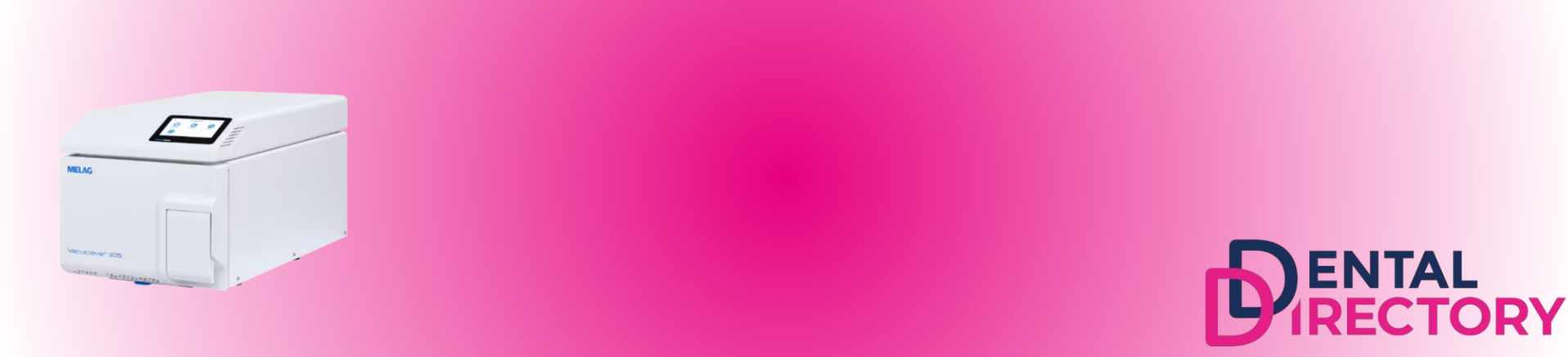
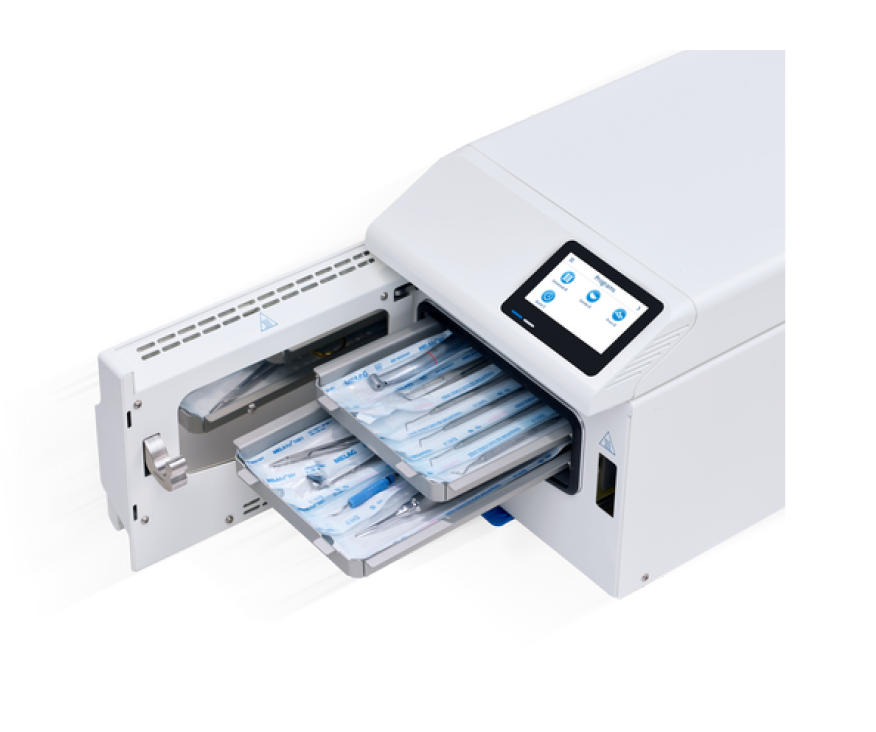
The MELAG Vacuclave 305 has super-fast cycle times which start as low as 6.5 minutes, including drying. This is incredibly useful and helps to reduce the practice’s need for rigorous equipment autoclave scheduling.
This only gets more useful for practices with only one or two autoclaves. Faster cycle times mean less reliance on using multiple autoclaves to keep the practice’s equipment sterilised. This will save energy, time, and simplify your practice’s disinfection workflows.
Is Energy Efficiency Important in Autoclaves?
Autoclaves are used very often and are very energy-intensive, so making the process as efficient as possible is a must. Your practice likely runs its autoclave several times a day, utilising a sealed environment within which lots and lots of litres of water are heated to over 121°C for effective sterilisation. For comparison you might visualise boiling an enormous kettle for 30-90 minutes; it’s an energy-intensive process.
While there are certain limitations to how efficient an autoclave can be – the physical properties of water being a big one – newer and upgraded autoclaves have a lot of features which can help your practice to save precious kilowatts, and money.
Our first tip for energy efficiency is filling the chamber. This is an easy one; any person with a dishwasher knows the principle that the more equipment you clean in one cycle, the more efficient you’re being. This is doubly so for an autoclave and relates to what we’ve previously discussed about cycle speeds. If your practice is constrained by scheduling and has to clean a certain business-critical piece of equipment as soon as possible to stay on schedule, you’re likely not filling the chamber. Quicker cycles mean that you can wait until you have enough equipment to fully fill the chamber before you run a cycle, without having to make do without crucial instruments.
The heating process in modern autoclaves is often improved, with power saving features and improved energy efficiency for shorter cycles. The benefits of this are lower energy bills for practices, and less energy wastage. By choosing a newer, more energy efficient autoclave, you’ll positively impact your budget and the environment.
The Vacuclave 305 & Energy Efficiency.
Melag's Vacuclave 305 has a Power Saving energy-efficient mode, giving you an energy-friendly alternative to other disinfection cycles
What is Traceability?
Traceability is a legal requirement in dental clinical environments, which requires you to keep a log of each batch that has been sterilised, the time, settings, and relative performance of the autoclave. This helps to protect patients, and in the event of a cycle failing to disinfect effectively, will let dentists know which pieces of equipment may need re-processing.
Many modern autoclaves have in-built traceability functions which help to ensure better recordkeeping and provide the additional convenience of decreasing the logistical input required to keep up-to-date records.
The Vacuclave 305 & Traceability
Utilising MELAcontrol Pro, the Melag Vacuclave 305 provides paperless batch release, user authentication and even barcode label printing – this last part would need to use the MELAprint 80.
The MELAcontrol Pro is a test body for "Class B" steam sterilisers, one which simulates the requirements for sterilising hollow instruments.
The results of batch release are available on the MELAG Vacuclave 305’s Display screen too, which can massively simplify your validation traceability and validation process.
Foot Space – Sterilise, Don’t Compromise on Size.
We’ve talked a lot about efficiency, without mentioning size vs capacity. Size is a term which outlines the foot space of an autoclave, whereas capacity determines how much internal volume it has (and how much equipment you can fit in as a result). Autoclaves can be quite large, with some models being larger than a washing machine and having 200 litres of space. This is overkill for most dental practices, instead you will want to find the ideal ratio of size, capacity for your practice. Do you need to reprocess tools often? Do you have limited foot space? Would you rather have an autoclave that sits snugly on your countertop?
Having a legacy piece of equipment, like an older autoclave, can have its benefits. But ultimately older autoclaves tend to have less efficient size-to-capacity ratios and often require much of the practice to be built around their bulky frames. This produces additional restrictions if you need to move the autoclave for whatever reason. Newer autoclaves have been designed to be lighter, smaller, and not compromise on capacity. If you’re looking to make counterspace, you could do much worse than re-evaluating the amount of space your older autoclave might be taking up.
The Vacuclave 305 & Foot space
Despite bringing 5 litres of capacity to the table, the Vacuclave 305 has a footprint of just 30 x 30 x 59 cm (W x H x D). Paired with a very low profile of 30cm, the MELAG Vacuclave has an excellent size to capacity ratio.
Built to Last – Reliability and Autoclaves.
This may seem obvious, but you want an autoclave that is reliable, not just in sterilising effectively with every cycle, but one which will not break down unexpectedly. Reliability is at a premium when it comes to autoclaves; being business-critical equipment, losing an autoclave often means losing a significant number of appointments until said autoclave can be repaired. This is particularly impactful for patients who need urgent treatment but may not be able to access it due to a last-minute autoclave breakdown.
Newer autoclaves often come with warranties, improved construction materials, and discounted engineering contracts to ensure cheaper repairs.
The Vacuclave 305 & Reliability.
Melag do not mess around with equipment safety - we can confirm this much (we’ve been to their warehouses before). The Vacuclave 305 is made with high-quality parts and subjected to a three-day endurance and stress test, including factory testing. All problems are caught, documented and immediately tested further or rectified. It’s an autoclave you can rely on.
Melag's Vacuclave 305
We’re enormous supporters of the Vacuclave 305, being one of the fastest autoclaves in its class, offering cycles from 6.5 minutes (including drying). This autoclave also has a minimal footprint of 30(W) x 30(H) x 59 cm (D), and a chamber volume of five litres, making it a desktop autoclave with an excellent capacity-to-size ratio. This is made even more impressive when the max load quantity of 2 kg instruments / 0.45 kg textiles is taken into consideration. Finally, this autoclave’s energy-efficient cycles, and power-saving modes help to make it an incredibly efficient autoclave.
Find out more about the Melag Vacuclave 305 with Dental Directory