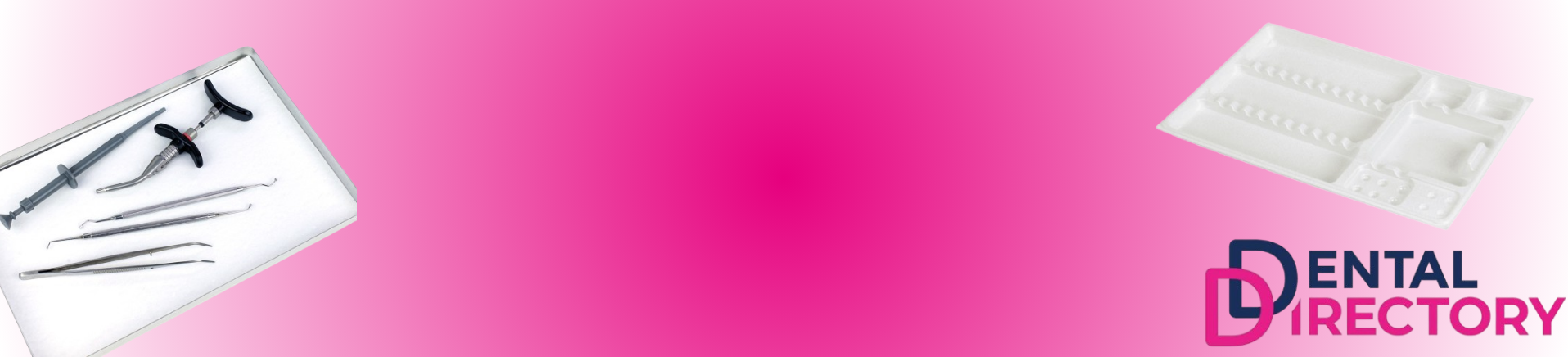
Tray liners help to improve patient confidence, practice hygiene, and prevent cross-contamination. With our recent explorations of other consumables that you might find across the dental practice, exploring tray liners was a logical next step. Disposable tray liners provide you with a sterile place to put your instruments during procedures, while reducing the risk of cross-contamination.
What Are Tray Liners?
Tray liners are sheets of multi-ply paper, typically given a PVC coating, and sometimes pre-sectioned so as to provide allotted space for instruments. These tray liners are used to prevent cross-contamination by absorbing any residual material or liquid which may be on your instrument when you place it down, as well as any contaminants which may be on your tray when you place down your tool. Finally, when the procedure is complete and you are in the process of cleaning away your tools for processing, you can discard the tray liner, with all of its contaminants, which will make sterilising your tray much easier.
What types of Tray Liner materials are there?
There are multiple different types of tray liners, each of which are suited for different tasks.
- Paper tray liners: These are designed to absorb smaller amounts moisture, then be disposed of when finished. Often made using 4-ply paper, these tray liners are typically the cheapest, and are used during general procedures.
- Plastic-coated tray liners: These tray liners have a PVC coating to them which allows them a degree of moisture resistance. These tray liners often are only moisture-resistant on one side, providing an extra layer of protection for your tray’s surface from high levels of moisture or contaminants.
What are the Benefits of Using Tray Liners?
- Infection Control: As previously discussed, this creates a mechanical barrier between instruments and the tray surface, this helps to prevent cross-contamination.
- Absorption & Fluid Control: Microorganisms travel much faster through wet surfaces than dry surfaces, so tray liners ensure you have a dry tray, and an absorbent surface to place your instruments.
- Organisational Aid: Many tray liners come pre-sectioned, which helps with instrument organisation.
- Equipment Protection: This helps to prevent your tray from excessive contact with fluids, which can cause it to rust or degrade. Similarly, it protects your instruments if your tray isn’t entirely dry.
- Compliance: Tray liners are held to regulatory guidelines and can help your practice to remain compliant.
Infection Control & Best Practices
When should I change my dental tray liners?
You should change your tray liners immediately after use. Tray liners are a single-use consumable, and the moment they are used they begin to pose a cross-contamination risk which will only increase unless they are disposed of properly.
Disposal protocols (hazardous waste considerations).
Tray liners must be disposed of in clinical waste, as they pose a contamination risk after use.
How do I store dental tray liners?
Tray liners should be stored in their packaging in a sterile cupboard or clean room. This is to help these tray liners from coming into contact with dust, fluids, particulates, or any other contaminants.
Are tray liners Environmentally friendly? & Cost Considerations
Tray liners are single-use items, often reinforced with plastic. This alone makes them difficult to recycle and dispose of outside of landfil. All of this is without even considering the fact that tray liners often have contaminants upon them. However, to offset this, some tray liners have begun to produce more sutainable and biodegradable options.
CUD012 : DispoTray Tray Liners Biodegradable 280 x 180mm
Compostable tray liners, or tray liners made from recycled material often function as other tray liners do, however they may be rougher, less durable and less abosorbent, additionally some recycled tray liners come in an off-white colour which reflects their recycled material. This off-white colour may be off-putting to some particularly picky patients. However, some practitioners may find these factors are outweighed simply by the fact that their tray liners aren’t contributing to landfill. Ultimately, it is a matter of preference.
How do I choose the Right Tray Liner for my Practice?
When you’re considering which tray liner you’d like to purchase, you should keep the following considerations in mind – Your common procedure types, your budget, and storage space.
Common procedure types: If you find yourself regularly performing the same sets of procedures, which requires the same set of tools, choosing a tray liner which best suits that set of tools may be the best choice.
Budget: This is self-explanatory, if you have enough budget spare to purchase in bulk, we’d recommend you do so, as bulk purchases tend to be cheaper per unit.
Storage space: Not every practice has a large dedicated space for consumable items. So, to avoid playing ‘consumables tetris’ and trying to fit every consumable item into a small space, we’d recommend you order within the space you have available, while bearing in mind the benefits of bulk orders.
Waste type: Avoiding waste in the dental practice where possible is an excellent habit to be in, also beneficial is ensuring that the waste that is produced can either be recycled or biodegraded, and will not end up in a landfill.
Thickness and absorbency: The benefits of ensuring that absolutely no medical waste makes contact with your tray are enormous. If you’re already purchasing tray liners, then ensuring the liner is thick enough to protect your tray from a significant amount of liquid or contaminant is a great priority to bear in mind as you make your purchase.
Conclusion –
Ultimately, a good set of tray liners can help to protect your practice and your patients from the risks posed by cross-contamination. These little liners are an excellent time-saving product, and make cleanup a much simpler task. While they may produce a form of waste, there are multiple biodegradable and recycled options which can help to alleviate their impact on the environment.