Indirect Treatments for Severe Wear With GC
Whether it's attrition, abrasion, or erosion, severe wear can occur very quickly. Changes in lifestyle, diet, stressors, even simple aging can put wear on the teeth, and its accumulation can all-too quickly develop from moderate to severe if not treated in time. So how best to treat severe wear? How do we diagnose the signs of wear and what workflows exist to help give patients timely, proven treatment? We'll be discussing these questions and more in today's blogpost.
If you don’t know about us, we’re Dental Directory. We’re a dentistry supplier who’ve been supporting practices for the last fifty years. We do training, equipment, consumables, and even full surgery kit fit outs. Once you’re done with this blog, why not see what we can do for you?
The Steps in Treating Wear
There's no single set workflow in treating severe wear, but the general goal of providing timely, effective and safe care in a way that is as minimally invasive for the patient as possible does apply. Direct restorations are often preferred, however there are some instances where indirect materials are more appropriate, as the case may be too complicated, demonstrating pathological or very severe wear. In the instance of an indirect restoration, GC have provided the following workflow:
INITIAL PHASE
- Clinical & functional diagnosis
- Aesthetic & functional treatment planning
TRANSITIONAL PHASE
- Wax-up, creation of models, keys and provisionals
- Mock-up & Mock-up guided tooth preparation
- Intermediate phase
FINAL RESTORATION
- Restoration manufacturing
- Cementation
Prevention and Education
As you may already know, the best means of dealing with wear is prevention, rather than treatment. If a patient is booking regular check-ups and is being monitored, it is much easier to catch the earlier signs of wear from factors such as Bruxism and provide a solution before any dental procedure is necessitated. Education also is an enormous contributor to preventing further tooth wear; a patient might simply just need to alter one aspect of their life or diet, such as chewing on only one side of their mouth, to arrest the progress of wear before it becomes severe. However, some patients don't always consider their oral health or reach out to dental professionals unless something is already wrong, so a technique of prevention and education can't be applied to every case.
How To Diagnose and Create Treatment Plans for Wear
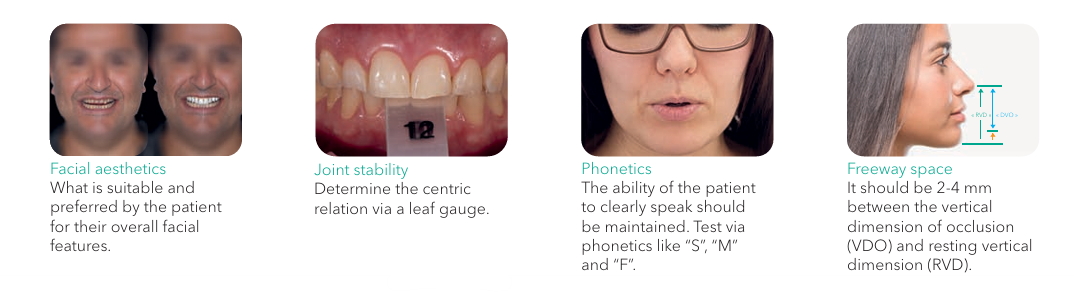
Diagnosing wear is difficult because it is such a general condition; wear can be localised or generalised, physiologic or pathologic, and can have countless causes. However, when you're making a diagnosis, it's worth pinning down the following six factors: the extent of wear, all affected surfaces/occluding teeth, localised or generalised, patient age, progression, and underlying factors.
Once those six factors have been evaluated, then a treatment plan can be developed. It's always worth bearing in mind that creating an aesthetic outcome should be a concern when treating wear. Also important are, functional requirements, and biomechanical considerations of the planned restorations, as well as considering if the invasiveness of the procedure is appropriate or can be reduced. A personalised Vertical Dimension of Occlusion (VDO) for the patient should be outlined and defined in a manner which balances functionality with patient comfort and aesthetics.
How to Manage the Transitional Phase when treating Severe Wear
Firstly, you may want to create a wax-up of your patient's mouth. A wax-up will help you to create a mock-up guided approach to prepare you for procedure, as well as plan a procedure where as little tooth structure is removed as possible.
GC have provided the following procedure workflow checklist for your mock-up:
- Take an impression, either conventionally or by using an intraoral scanner.
- Transfer this impression to an articulator (digital or analogue) and check.
- Plan the anterior design and evaluate the aesthetic changes.
- Validate the increased space in VDO with the articulator system and patient in centric relation (CR).
- Continue with the posterior design after confirming that the increased space is feasible.
- Either 3D-print or make a negative copy of your model.
- Take an impression of the 3D printed or the negative copy of your model prepared by your lab at step 6.
- Fill up the inner part of the impression with TEMPSMART DC. Be sure to bleed the cartridge at first use,
- Place impression intra-orally within 45 sec of dispensing. For Teflon placement, please refer to intermediate phase with TEMPSMART DC.
- 2-2.5 min after start of mix remove excess material and remove the impression from the mouth.
- Check if there are voids or gaps before polishing. In those cases apply G-Multi PRIMER and correct those areas with G-ænial Universal Injectable.
- Finish and polish surface by using your favourite composite polisher system.
- Control bite to minimise occlusal stress and load.
What Materials to use with an Indirect Restoration?
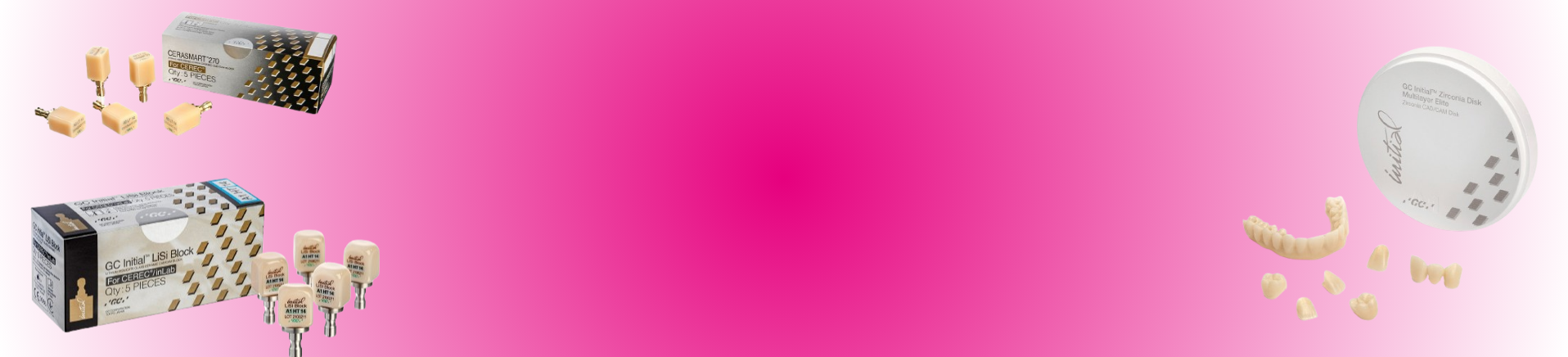
GC provide a variety of materials which could be appropriate for use with your Indirect Restoration, the three in particular that we'll be talking about here are the Initial LiSi Block, and the Initial Zirconia Disk & Initial Zirconia Disk ML Elite.
|
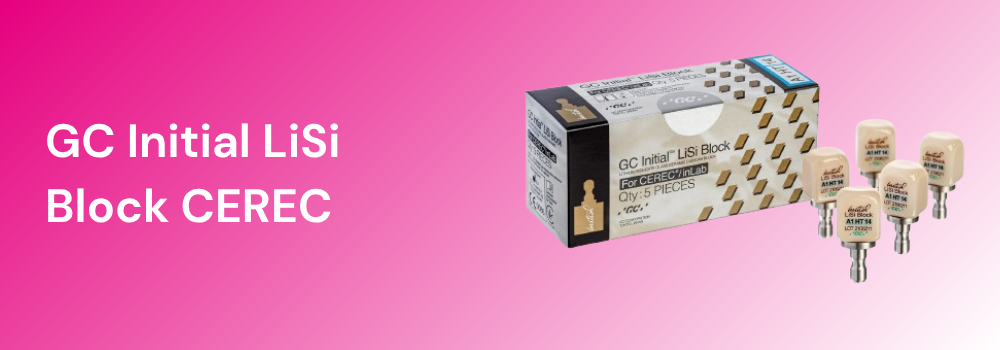
GC Initial LiSi Block CEREC, Size 14, BL
|
|
A fully-crystallsied lithium disilicate block which has been designed to be used without firing while still demonstrating the optimal physical properties you might want from a CAD/CAM Block. Utilising unique High Density Micronisation (HDM) technology, it demonstrates high wear resistance, smoother margins, and a final result which delivers on aesthetics. This makes the Initial LiSi Block an ideal, time-saving solution for single-visit chairside treatments |
|
Learn more about the 3M™ Filtek™ One Bulk Fill Restorative |
|
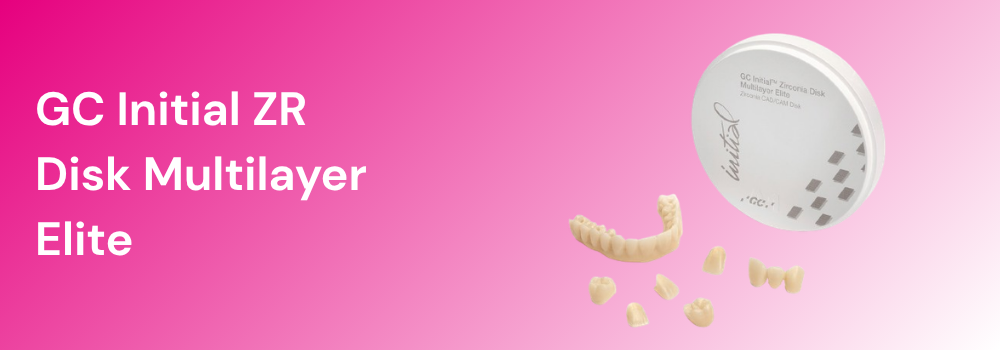
GC Initial ZR Disk Multilayer Elite
|
|
An advanced multilayer zirconia disk which has been created to deliver a perfect balance between durability, strength, and aesthetic outcome. Utilising its shade and translucency gradients, the disk offers lifelike results that mimic the natural tooth structure. The GC Initial Zirconia Disk Multilayer Elite also features a translucency gradient, by blending 4Y-TZP and highly translucent 5Y-TZP zirconia powders, an increase in translucency in the transition to the incisal area is achieved from 45% to 49%. |
|
Learn more about the GC Initial ZR Disk Multilayer Elite OM3 25mm |
CERASMART270
|
|
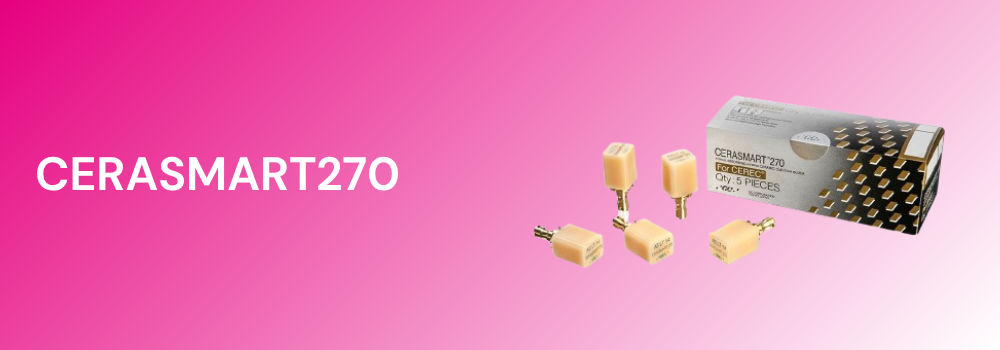
Created using the FSC Method, an innovative filler treatment method for homogeneous filler dispersion, the CERASMART270 demonstrates a stronger bond between the filler and matrix, resulting in a stronger material with improved aesthetic properties. With its improved strength and wear resistance, CERASMART270 is on the cutting edge of restorative dentistry. The surfaces remain very smooth and glossy over time, which is beneficial for aesthetic purposes and for the purposes of limiting the wear of opposing dentition. The improved breaking energy and flexibility of the material make it extremely suitable for treatment of worn dentition. Indications:
|
|
Learn more about the Cerasmart270 |
Conclusion
While severe wear may present in complex cases, and it may be hard to immediately diagnose and pin down, there are several effective treatment plans and appropriate materials for indirect restorations which can help to address a wide variety of treatment contexts.