The History of Cone Beam Computed Tomography (CBCT)
Despite the principles for these machines being established as early as 1917, Cone Beam Computed Tomography machines – hereafter referred to as CBCT Machines - are still a relatively new technology.
In the region of Bohemia, which was a part of the then-Austro-Hungarian Empire, Johann Radon outlined the mathematical theory of computed tomography (CT), which was later abandoned due to the sheer complexity of reconstructing CT images.
However, in 1992, close to a full century later, a prototype CBCT Machine took the first panoramic tomography reconstruction. Since then, CBCT Machines have continued gathering momentum within dentistry, and for good reason, since CBCT scans are the only true way to get a one-to-one three-dimensional measurement of parts of the mouth, and this method of scanning boasts several key advantages over its competitors.
CBCT Machines are a growing and popular alternative to their orthopantograph (OPG) counterparts. Boasting high levels of accuracy, up to ten times the resolution quality, soft tissue visibility, even being able to see early-stage periodontal disease and periodontal abscesses. So, what are the benefits of a CBCT Machine? How can it improve your practice's workflow and patient outcomes, and importantly, does your practice need a CBCT Machine? We’ll be discussing these questions and more in this complete guide for CBCT Machines in dentistry.
If you don’t know about us, we’re Dental Directory. We’re a dentistry supplier who’ve been happily supporting practices for the last fifty years. We do training, equipment, products, and even full surgery kit fit outs. Once you’re done with this blog, why not see what we can do for you?
The Basics – What is a CBCT Machine?
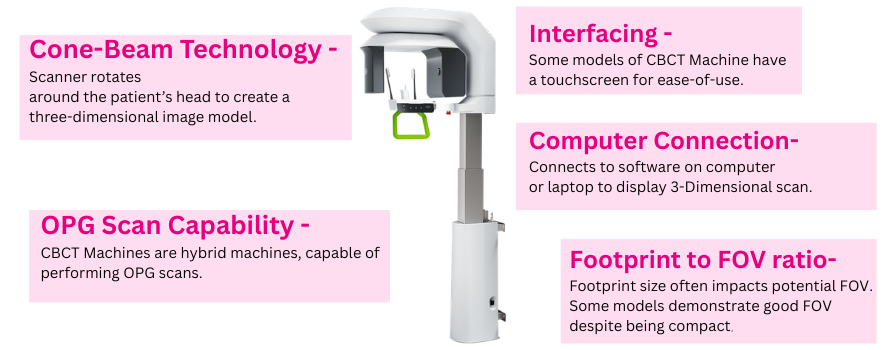
A CBCT Machine is x-ray equipment that takes a complex scan to create a 3D model of your patient’s teeth, nerve pathways, root canals, bones, and soft tissue. CBCT Machines often scan using a set FOV (Field of View), which dictates the size of the area being scanned.
Smaller FOVs are very well-suited to endodontics or implantology, as you’ll be able to get a good grasp on the precise cross-section you’ll be working on if you’re planning a root canal, as well as any complicating factors. For an example where you’d want a larger FOV, orthodontists really benefit from having the full context of a larger FOV. If you’re using a CBCT Machine in an orthodontic procedure, chances are it’s a relatively complex case, so the larger FOV will help you to get all the necessary information you need, and see the patient’s mouth in 3D, to better track spatial relationships, and home in on any particular issues.
FAQ – What is a CBCT ‘Scout Image?’
Before a patient is scanned, sometimes a practitioner will elect to take a Scout Image. The scout image (also known as the Scout View or SV) is an extremely low-dose radiation scan to give a preview of the area being scanned (sometimes referred to as a region of interest [ROI]). This is used to ensure that the patient’s positioning and the ROI are both correct before performing an in-depth scan.
FAQ – Will my CBCT Machine do OPG scans?
Generally, yes, CBCT Machines are hybrid machines, capable of performing OPG scans, as well as CBCT scans. This means that you can replace your OPG machine with a CBCT scanner if you are planning to do both types of scans regularly.
Do I Need A CBCT Machine in My Dental Practice?
Put simply, a CBCT Machine isn’t a mandatory piece of equipment for a dental practice, but in our experience once one of these machines is made available to a practitioner or team, it very quickly becomes an integral part of that practice’s function. Additionally, many newer-built practices implement CBCT machines from the very beginning, so as to help support their growth. While many might hesitate at seeing the price point of some CBCT Machines, there are many circumstances where a practice might require a CBCT Machine’s accurate, powerful scanning technology over 2-dimensional alternatives.
One testimony on CBCT Machines that we find particularly compelling, comes from Dr Vivak Shah, principal dentist of ‘Saving Smiles’. When writing for an article in Dentistry, he succinctly describes some of the best reasoning for integrating a CBCT Machine into your practice that we’ve heard. Please see his quote below.
‘Dental imaging has long been central to diagnosis, yet in many practices it still sits slightly outside the consultation itself. Scans are taken elsewhere, reports return later, and treatment discussions often resume once momentum has faded. Over the past nine months, bringing imaging fully in-house has highlighted how much this separation influences not just workflow but also the quality of conversations our clinicians can have with patients.
‘Our decision to move imaging into the practice was driven by practicality rather than a desire to adopt new technology for its own sake. We were routinely referring patients externally for scans, which meant additional administration, delays and a fragmented patient journey. As our orthodontic and implant services expanded, that separation increasingly felt out of step with the experience we wanted to provide.’
- Dr Vivak Shah, principal dentist of Saving Smiles Weedon
The Costs of a CBCT Machine
Upfront costs
The upfront investment of a CBCT Machine can be broken down into the following, the machine itself, the cost of its installation, and the training that your staff will require[1] to be able to use it. We are also assuming that your practice has a computer that can run the relatively high-end graphical software you’ll need to use your CBCT. If not, you might need to add the cost of a computer upgrade to the list.
To break this down into further detail, CBCT Machines can cost anywhere from ~£27,000 to over £130,000. Deals and offers can help to alleviate the upfront cost, and ongoing payment plans are an excellent way to help get your CBCT Machine to help pay for itself once it starts making a return on investment.
Compared to purchase, installation is an altogether more multifaceted cost to consider, since not only do you have to pay for installation, but also you may lose a small amount on practice downtime. This additional cost may be compounded as you’re going to need a significant number of hours of recommended training1 to use your CBCT Machine. If this is booked with a different company, it can quickly become a scheduling nightmare, which is why we’d recommend booking with a trusted supplier capable of handling training in-house and can help you schedule to minimise practice downtime.
Key Costs:
- Machine costs.
- Installation costs.
- Training costs.
- Potential time loss on installation.
Ongoing costs
Getting your upfront costs out of the way is the hardest part of the process, but it’s not over yet. CBCT Machines have some small ongoing costs associated with them, much like any other piece of dental equipment. These ongoing costs are expenditures which relate to the upkeep and continued functioning of a CBCT Machine, so mostly repair and maintenance work, with a couple of additional costs for software. While the expenditure might not be as much as the upfront cost of purchasing and installing your CBCT Machine, it will be a regular expenditure, so make sure to factor in these costs and budget appropriately before committing to a purchase.
The ongoing expenditures are as follows: servicing, software, and compliance. Servicing consists of planned or unplanned repair and maintenance visits from a trusted, trained, and certified engineer. Historically, these costs are considered somewhat significant, but modern equipment repair plans can be quite competitively priced and flexible.
Software refers to the proprietary software which manufacturers use to help your CBCT Machine function, and many features of this software may be locked behind a subscription.
Finally, there is the matter of compliance. A prior assessment of the proposed x-ray facility layout by a suitable radiation protection adviser (RPA), and appropriate performance testing, quality control (QC) and safety checks immediately after installation. Further testing at least once every three years of your CBCT Machine will be required to ensure it is functioning properly and, again, the input of an RPA & Medical Physics Expert (MPE). On top of this, you will need to perform a monthly QC test, the results of which should be stored should they be needed at the time of an inspection.
Key Costs:
- Planned repair and maintenance checks.
- Unplanned repairs (potential expendiature).
- Software subscriptions.
- Radiological performance checks.
FAQ – How do I save on CBCT Machine maintenance?
One tip to save on maintenance costs is to always stay on top of running your monthly QC test. Every three years your CBCT Machine will need to be appropriately performance and QC tested, and its functionality will need to be verified by a professional, i.e. an MPE. If monthly QC checks are not undertaken, by the practice, the current recommendations state that annual, formal testing of the machine be undertaken annually. This level of compliance is necessary to ensure your CBCT Machine is working properly and providing accurate images relating to your patients’ conditions.
When would I use a CBCT Machine?
Many dentists tend to reserve CBCT use for when they need additional context before a procedure, or when they’re dealing with a complex case. CBCT radiographic images, unlike OPG images, can tell you a lot about important parts of a patient’s case, bone thickness potential absences, tooth root anatomy, nerve canals, so dentists typically rely on CBCT images when they need the full picture to build out their patient’s care plan.
How a CBCT Machine Can Generate Revenue
On the positive side of things, being able to quickly gain a very accurate and high-definition 3D render of a patient’s mouth creates a lot of opportunities for dental practices.
Implant Dentistry
Implant dentistry requires a lot of planning; any procedure that takes place close to a patient’s nervous system (i.e. injury of the trigeminal nerve) should be taken with the utmost seriousness.
CBCT imaging helps to reveal important context regarding a patient’s case before an implant, this includes bone thickness around nerve canals, the quality of bone you’ll be working with. Thise information helps to make procedures like implants, or endodontic work more predictable, with more detailed surgical plans, and the ability to rule out non-viable cases.
Endodontics
Creating a treatment plan for a root canal treatment is notoriously tricky, and sometimes basic diagnostic equipment won’t be enough when preparing for a procedure. This becomes less of an issue when, with a CBCT, you’re able to spot the number of caries a patient has, their exact root shape and curve, as well as detect any abscesses or infections which haven’t yet been noticed. This ultimately leads to better retention, as you’ll be able to deal with more issues in-house, rather than having to refer a patient to another practice for accurate diagnosis.
Orthodontics
For an orthodontist, the case for having an accurate 3D model of your patient’s mouth seems to write itself. The enhanced diagnostics and insights into a patient’s cranio-facial complex provided by a CBCT model are astounding, and can make brace placement much easier, for example. However, the use of CBCT imaging must be clearly justified and that means that if you’re going to use CBCT for orthodontic work, you should first evaluate the case, with a mind of weighing up the risks of a potentially higher radiation dose against accurate 3D images.
Cost Savings from CBCT
Even in circumstances where a CBCT Machine doesn’t drive revenue, it can quite often help you save it. Without the requirement to refer patients out-of-clinic for cutting-edge accurate diagnostics, more patients will be retained by your practice. This is useful for you, as it keeps revenue in-house, but also great for the patient, as they don’t have to wait for an accurate diagnostic. On the topic of accurate diagnostics, CBCT scans will help you to create a more effective and holistic treatment plan. The information gathered from a single image will provide what you need to know to avoid complications. Which will keep your patients safer and improve their satisfaction with your practice.
Ultimately, a CBCT Machine may help you to retain patients as well as diagnose, plan for, and treat complex cases faster. The cost benefits for these increases in efficiency and efficacy are plentiful, and one of the reasons CBCT Machines have become so widely adopted.
Patient experience and CBCT

Everyone knows how nerve-wracking it can feel to be a patient. Your body is doing something it shouldn’t be doing; you don’t fully understand what’s happening or how your dentist plans to treat it. This is another area where the scans provided by a CBCT Machine start to stand out, as the 3D model generated by a scan is quite intuitive to parse, and provides a model that the dentist can use to illustrate complex aspects of the patient’s case, and how they plan to respond with their treatment plan. This may seem like a small benefit, but being given such a detailed visualisation of the situation can help with patient confidence and might even improve case acceptance.
Ultimately, many of the cost benefits to a practice also benefit the patient experience, too. Remaining in one practice, being treated by one dental team, having your case progress quickly and without unnecessary referrals are all enormous positives for a patient who might be in pain, and is looking for quick, effective treatment and the highest quality of care.
Is A CBCT Machine Right for Your Practice?
This question is a little nebulous, we have a lot of experience with CBCT Machines, but we don’t know your practice’s particular circumstances, but we’ll do our best to help you find your answer.
Firstly, it’s worth asking – does your practice work with dental implants? If so, then a CBCT Machine immediately becomes much more appealing, as it can help you work out an airtight treatment plan for your patients very quickly, and provide a large amount of critical information you won’t be able to otherwise find out about your patient (bone density, nerve canal shape and location).
Secondly, it’s worth asking yourself how regularly you refer patients out-of-practice for imaging. Getting effective imaging is a significant part of planning a procedure, and having to refer patients out of practice to get this done is inconvenient for your patient, and a potential opportunity for revenue for your practice which is not being used or pursued.
The final question we’ll encourage you to ask yourself is this – are you planning on expanding your practice or services in the future? The thorough and effective scanning of a CBCT Machine lends itself very well to cutting-edge procedures in multiple fields, from endodontics to orthodontics. If you want a practice that is better able to keep up with advancements and developments in how dental procedures are performed, a modern CBCT unit is a firm investment.
Choosing the Right CBCT Machine.
So, if you’ve decided you want to buy a CBCT Machine, or you’re on the fence and want to explore your options, where do you start? Ideally, we’d suggest looking into five factors when making a decision like this – footprint, software, use case, features, and resolution.
Software – Software is an important consideration, but not one that dentists often think of. It’s easy to be wowed by the hardware of a CBCT Machine, but the ease-of-use, reliability, and cost of a CBCT Machine’s software are huge considerations to take into account when you’re purchasing a unit. Software is often covered under a subscription model, rather than a single purchase, much like Adobe or Microsoft Office. So, it’s worth taking into account the cost of subscription, as well as the general feel of the software. We’d recommend booking demo sessions with your digital specialist before deciding on a CBCT Machine, so that you get a feel for the software and can make an informed decision on if you think your staff will be able to effectively get the most out of said software after their mandatory training.
We should also mention, you will need a computer or laptop which is capable of rendering and running complex software imaging, as CBCT software can be quite graphics intensive. This is worth bearing in mind before a purchase, because it’s relatively easy to forget, and an important part of having a functional CBCT Machine.
Use case – Depending on the anatomy you will be trying to scan, different CBCT Machines with different fields of view may be more well-suited for use in your practice. However, there are some instances of CBCT Machines with flexible FOVs, for example, the W&H Seethrough, which has a very wide FOV, but can focus in on more specific anatomies for enhanced accuracy.
Footprint – Put simply, does the CBCT Machine fit into your practice while still retaining its required FOV? Ideally, you would pick a CBCT Machine based on a minimal footprint in the practice, so that it might fit into any practice room, however, there is a correlation between footprint and FOV with larger FOVs requiring a larger machine and footprint.
Features – Features can really help you to get more out of your CBCT scan. For example, studies show that up to ≥3 mm of patient movement during a CBCT scan can significantly impact the efficacy of the scan, as well as the legibility of its results. This makes patient stabilisation features such as a chin rest or strap, very much worth considering.
It’s also worth considering that many modern CBCT Machines are often given software upgrades to provide up-to-date features, so it’s worth investing in a CBCT model from a brand you trust, and in a range which is known for regular, non-intrusive software updates.
Resolution – CBCT Machines display their resolution in Voxel sizes, and the smaller the number, the higher the quality. However, increasing resolution also comes with a higher dose of radiation. While in some cases taking a scan with a higher level of resolution may be unavoidable, there are some means of circumventing the loss of detail in lower-resolution scans, such as image-enhancing programmes or even AI upscaling, which are often included in a CBCT Machine’s software.
CBCT Scans and Radiation
As laid out by the as low as reasonably practicable (ALARP) principle, optimising radiation exposure is a key concern for practitioners. While a CBCT scan it highly likely to have a much lower radiation dose than say, an axial CT scan, CBCT imaging may have a higher dose than some other x-ray imaging methods. Keeping yourself and your patients at the lowest possible dose of radiation exposure while obtaining the maximum amount of diagnostic information is part and parcel of basic care, which is why for non-complex cases, some practitioners tend to utilise OPG scans over CBCT scans. However, this does not always need to be the case.
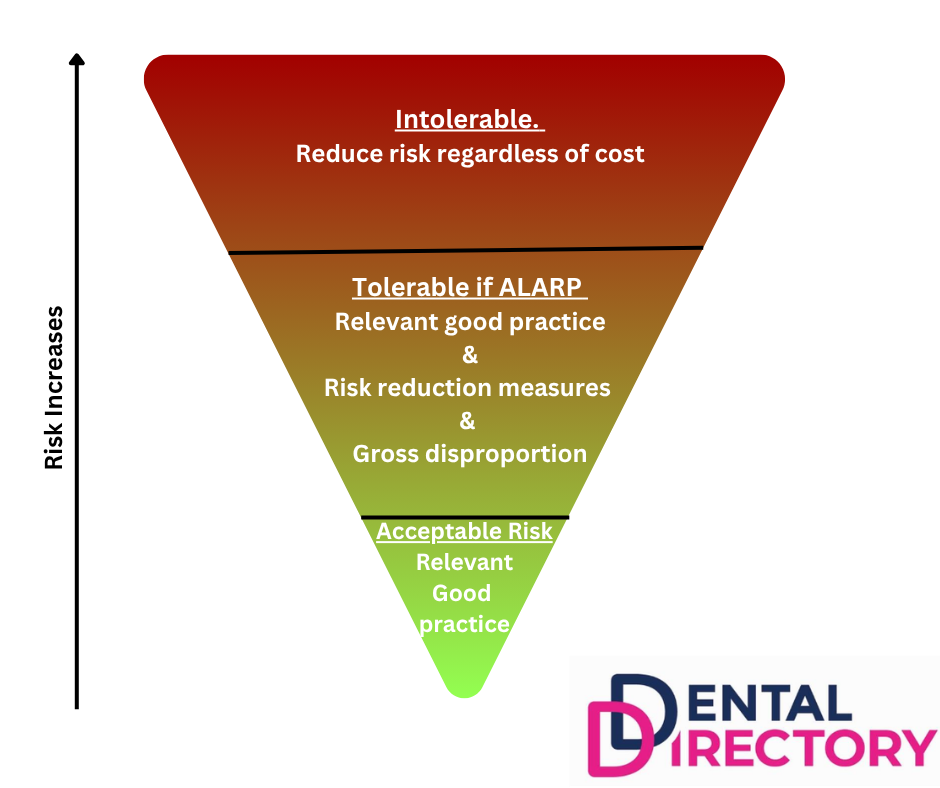
The justification for using a CBCT Machine over an OPG machine in most cases is the additional context and patient confidence it provides. Documentation regarding the radiation dosage of your machine should be made easily available by the supplier, meaning you can compare the additional radiation dose your patient will face against the risks of say, early-stage periodontal disease. There are many instances where a slightly higher radiation dose from a CBCT scan is justified when compared to an OPG scan.
With regards to optimisation, modern CBCT Machines tend to provide lower doses without sacrificing image quality. With low or extra-low options for radiation doses, which can help a practice to remain compliant with regulations and reassure patients about the scanning process. Another example can be found if we return to the W&H Seethrough, which uses inbuilt intelligent features, such as corrective imaging, to reduce the radiation dose required for a high-quality image without sacrificing accuracy.
The Return on Investment Timeline for CBCT Machines.
When making a large equipment purchase for the practice, especially on a piece of technology as sophisticated as a CBCT Machine, it’s worth bearing in mind that return on investment may not happen immediately but rather become visible after around half a year. This is due to a number of factors which we’ll break down in detail, but largely boil down to practitioner confidence, and the fact that it may take a while to become confident with your CBCT Machine. While this timeline is not definitive by any means, it is meant to illustrate that the gains you may get from your CBCT Machine may not be immediate, but as you become more familiar with the technology, they should help your practice to build momentum and eventually make a return on your investment.
The first 3 months, the CBC-Teething stage.
In the first three months, you’ll likely be getting to grips with your CBCT Machine. You’ll have had your training¹ and be proficient enough to be able to perform basic tasks with it, but usage at this point will depend on your knowledge and willingness to use a piece of equipment you’re still getting the hang of. This can be especially complicated if you aren’t familiar with CBCT software, so patience will be a strong asset in this part of the CBCT lifecycle.
At this point we’d recommend keeping your procedures simple and limited to your comfort level, making sure to explore the software options of the CBCT Machine you’ve purchased and apply them where possible. Your continuing education and training (via CPD) training is key and will be a great help.
Three-To-Six Months, CBCT Confidence.
This is the point where practitioners will have gotten the hang of how to use their CBCT Machine and software, and will be using it much more, integrating the unit into their workflow, and discovering the optimisations that a well-used CBCT Machine can provide.
For an example of how a CBCT Machine can improve your workflows, consider the W&H Seethrough‘s Iodent Connection. Iodent is W&H’s proprietary software ecosystem for reporting and communication. The Seethrough is the only CBCT range which has an integrated workflow where you can connect your Implantmed 2, and once you've planned your implant, it'll send the data straight to your implant motor, all the values you need will be pre-loaded, as well as some reporting. This helps you with compliance and cuts a significant portion of your workflow down.
Six to Twelve Months, return On Investment Begins to Build.
At this point, your CBCT Machine has become an established part of your practice for a long time, and the impact it has had on your patients and procedures should start to become visible and trend upwards. Higher patient retention and improved case acceptance rates should be visible at this point too.
If at this point you haven’t noticed any return on investment regarding your CBCT Machine, it may be worth considering other factors which may be at work. Always follow your training and utilise your machine and software to its maximum capabilities!
Example CBCT Machines
W&H Seethrough Flex
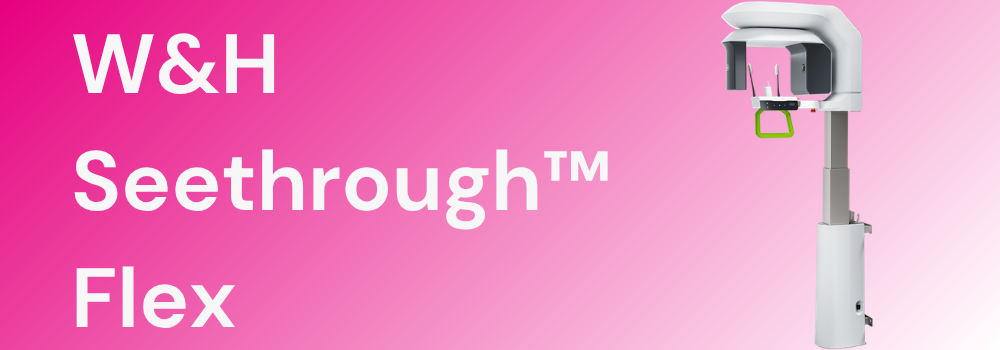
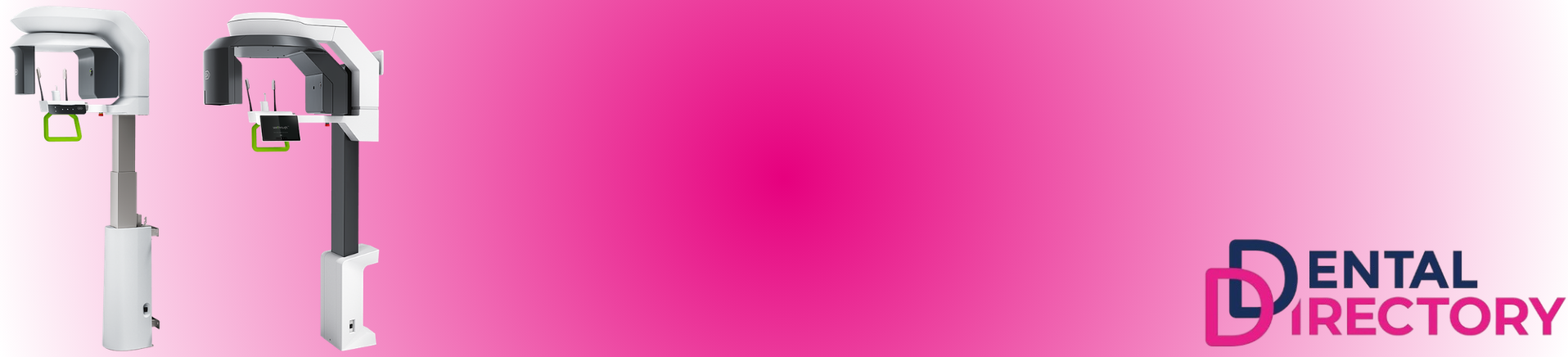
The Seethrough Flex is the compact counterpart to the W&H Seethrough Max, having a smaller footprint, while still retaining a high level of usability, FOV, Image quality, among other standout features. Intuitive to operate, the Seethrough Flex demonstrates minimal radiation exposure and precise imaging. With an FOV range of 5 × 5cm - 14 × 10cm, this system demonstrates an excellent ratio of footprint to FOV. Also, impressively, the Seethrough Flex manages to maintain its full 360° rotation despite its small footprint, which is a remarkable feat of engineering, and allows for more effective scans.
Features, Benefits, and Facts:
- As previously mentioned, the Seethrough Flex maintains 360° rotation even in the smallest of spaces. With an innovative elliptical trajectory, the Seethrough Flex uses its full 360° of movement to provide a comprehensive dataset acquisition with optimised space efficiency.
- While already easy to use, this can be further enhanced with the addition of a touchscreen interface. The same intuitive 25cm touch screen which you would find in a purchase with your Seethrough Max is available via additional purchase for Seethrough Flex, giving you an additional option for how you want to operate your CBCT Machine.
- The Seethrough Flex offers the best FOV-to-device ratio on the market. With a wide FOV coverage from 5 × 5 cm to 14 × 10 cm, it is a real all-around system.
- Utilising several intelligent features, the W&H Seethrough Flex is capable of providing thorough scanning with a minimal radiation dose. Combined with the compact design, ensure minimum exposure and maximum protection.
Discover the W&H Seethrough Flex
W&H Seethrough Max
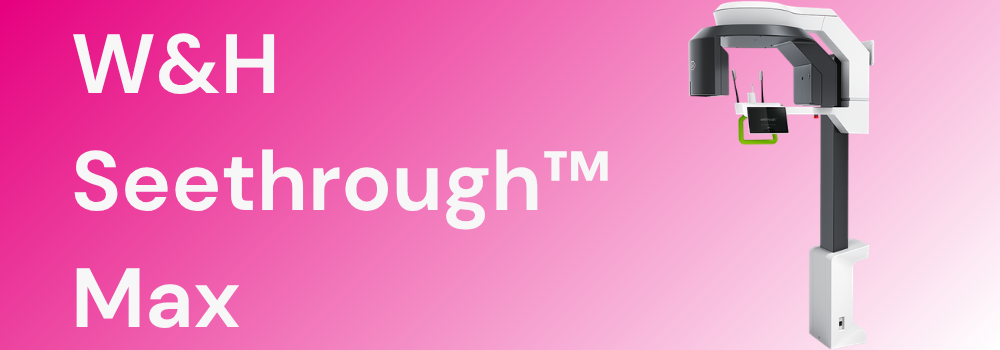
This unit excels in many of the areas you’d want from a CBCT Machine. For example, it has an extra-wide FOV spectrum, including from 17 x 17cm to 3 x 4cm, meaning it can, subject to appropriate justification and optimisation, give you anything from a scan of the entire cranial volume to precise details for endodontic work. Its low-radiation dosage per scan is a nice bonus too for patients and users. A standout of the Seethrough Max you might not immediately consider however is its design and layout. This CBCT unit is laid out in such a way that encourages patient comfort, enhancing the chances they’ll stay still long enough for a successful scan. This design also allows for face-to-face positioning, which is another bonus for patient comfort, and makes the scanning process easier.
Features, Benefits, and Facts:
- With a respectable footprint of 1280x1520mm, the Seethrough Max needs a little more room than its counterpart, the Seethrough Flex.
- It's worth repeating that the FOV coverage of this CBCT Machine is exceptional. From 3 × 4cm to 17 × 17cm, you have the ability to scan for a particularly wide range of applications. Making this unit useful across multiple fields, such as endodontics and implantology to oral surgery and ENT.
- The Seethrough Max is fitted with a special vertical sensor shift. This means that the x-ray beam is optimally adapted to the patient morphology and the selected examination type, creating more detailed and accurate images with each scan.
- The Seethrough Max automatically adjusts in response to the patient’s position. This encourages a higher level of focus on the patient’s anatomy and enhanced imaging results.
- Being able to rotate a full 360° means that the Seethrough Max can cover the full range of angles and perspectives, creating images with higher levels of definition and clarity.
- This unit comes with an intuitive 25cm touch screen for ease-of use.
- Its open design and wide gantry aperture allow for continued patient-practitioner communication and observation.
Discover the W&H Seethrough Max
What are Intelligent Features in CBCT Machines?
We’ve alluded to ‘intelligent features’ several times throughout this blog post and we haven’t delved too deeply into this subject because of how expansive the list of intelligent features can be. Intelligent features are, simply put, small solutions which help a CBCT scanner circumvent the limitations of its own scanning technology to provide enhanced image resolution, lower doses of radiation and other benefits. So, to illustrate some of the intelligent features you may find in a CBCT Machine, let’s go through the Seethrough Range’s Intelligent Features.
- FOV and ROI adjustment: Once you've chosen your desired FOV in the scout preview, you can freely adjust the region of interest. This ensures your FOV positioning is accurate and reduces the chance that you’ll need to re-scan your patient.
- Patient Motion & Position Correction: Using an advanced patient motion correction algorithm, the Seethrough digitally elevates image quality to new levels in 3D and 2D imaging. Additionally, 2D images are further enhanced by a 21-layer autofocus system, which has been seamlessly integrated with a patient positioning corrective.
- Metal Artefact Removal (MAR): This intelligent feature eliminates interference from metallic artefacts, which is incredibly important for image fidelity. The Seethrough range in particular allows you to review images with MAR either on, or off. This helps to enhance your diagnostic accuracy and allows for flexible visualisation.
- AI-Enhanced Functions: Seethrough Studio uses a range of AI tools for imaging enhancement, including 3D volume alignment, tooth segmentation, arch line generation, automatic nerve tracing as well as useful support for pathology detection.
- Practice Integration: You can easily integrate Seethrough Studio into your patient management system. You can even start the Seethrough Studio directly from the PMS without having to re-enter the patient data. This convenience and ease-of-access makes using your CBCT Machine much easier.
- Implant Planning: Seethrough Studio is full of useful features, including standard integrated implant planning tool for easy visualisation and preparation of the treatment.
- Iodent Integration: The Seethrough CBCT integrates with Iodent, and the Implantmed Plus 2. This makes the pathway between diagnosis through to treatment smoother, as your Seethrough’s Data can pre-load your Inplantmed Plus 2 with the data it needs, reducing the risk of error, increasing your precision and simplifying your workflow.
Compliance and CBCT Machines – Inspections
Inspections come part and parcel with complex equipment like CBCT scanners, and most manufacturers recommend you get a check-over yearly with an annual maintenance check. In addition to this, you’ll also need radiological performance testing and QC checks from approved engineer, in conjunction with an MPE, at least once every three years. On top of this, you’ll need monthly quality control (QC) testing which is typically performed via integrated software with your CBCT. If your machine does not have such software capabilities, or these QC checks cannot be undertaken for whatever reason, annual performance and QC checks are recommended. Testing for CBCT units can take up to four hours and ensures that your machine is in working order and is subjected to tests to show it is capable of meeting current national standards.
What do radiological performance testing and QC checks include?
There are a lot of steps to radiological performance testing, and the process is very thorough, so we can’t highlight everything an engineer might do. However, some example actions taken during a radiological test may include the following:
- Checking the serial number of the x-ray tube head, and marking down its operating potential [kV], tube current [mA] and filtration values.
- Checking the stability of the x-ray mounting position, as well as inspecting for any damage to the x-ray tube head.
- Checking the electrical and mechanical safety of the machine
- Providing an assessment of the unit's condition.
- Checking the condition and operation of the x-ray exposure control, checking the rotational movement of the x-ray tube head and the fittings.
- Checking the operation of the dead man switch and/or emergency stops; warning lights and audible signals.
- For the routine performance testing, completing the required number of exposures and recording the measurement results (e.g. dose-area product [mGycm2], operating potential [kV], exposure time, filtration).
- Undertaking all appropriate radiation measurements.
- Photographing the x-ray machine as a record of any concerns noted on the engineer’s paperwork.
- Highlighting any discrepancies to you, the customer, in relation to the electro-mechanical operation of the x-ray equipment.
- If you have Radiation Protection Consultancy (RPC) contract with Dental Directory, the results will be sent to Dental Directory's RPA/MPE for review and, for the routine performance testing, a brief formal report will then be issued to the practice.
Conclusion
CBCT Machines are a firm investment in a practice, and can help to enhance your diagnostics, your treatment plans, your patient experience, and your patient retention. While CBCT Machines require a lot of expertise and patience to master, they quickly become an asset to most practices.
Learn more about Dental Directory’s Range of CBCT Machines.
[1] See “Guidance Notes for Dental Practitioners on the Safe Use of X-ray Equipment, second edition” for details of relevant CBCT training requirements - https://cgdent.uk/safe-use-of-x-ray-equipment/